

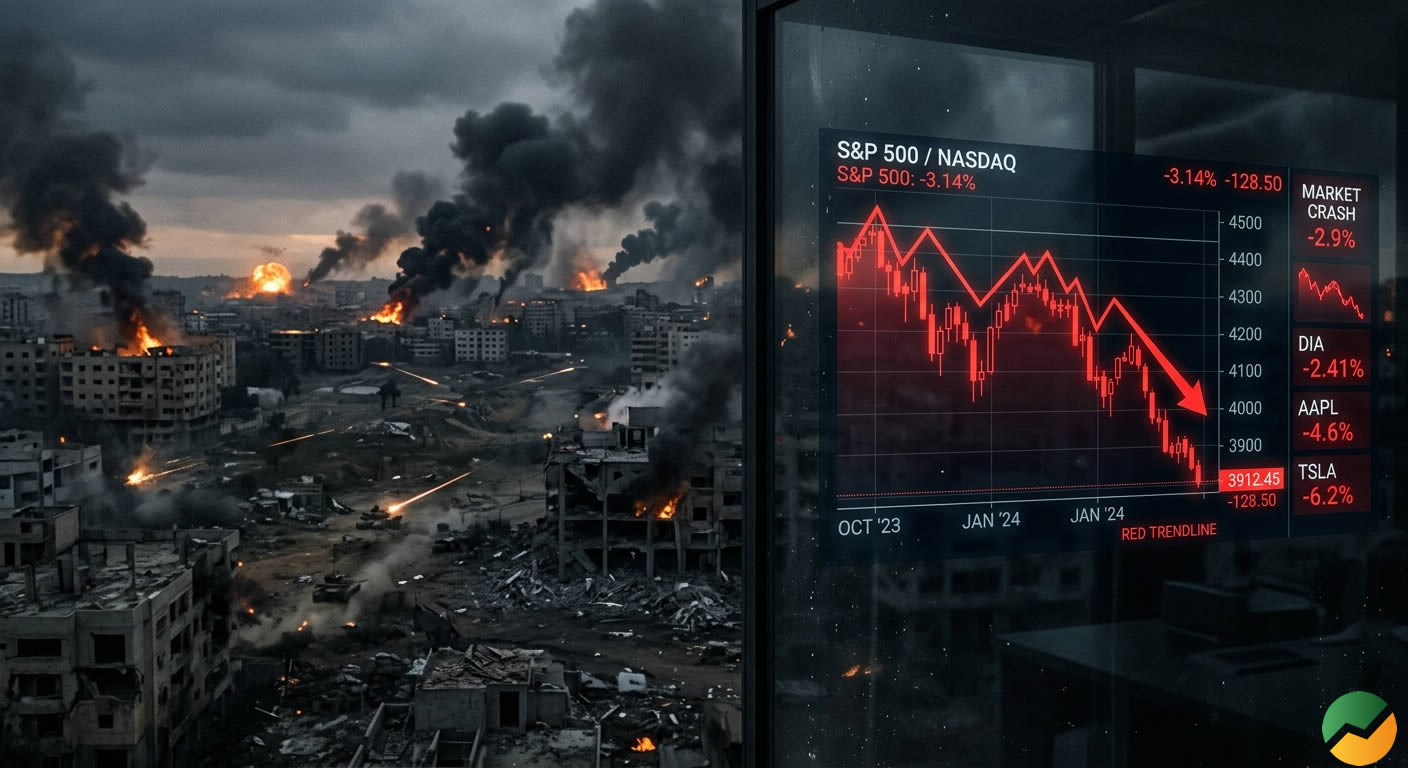
There is an old catchphrase that is often laughed at when it comes to trading in the stock market: “this time is different.” When you hear that, as a trader or investor, you have to ask: Is it really different? How are the markets reacting this time versus how they have reacted in the past?
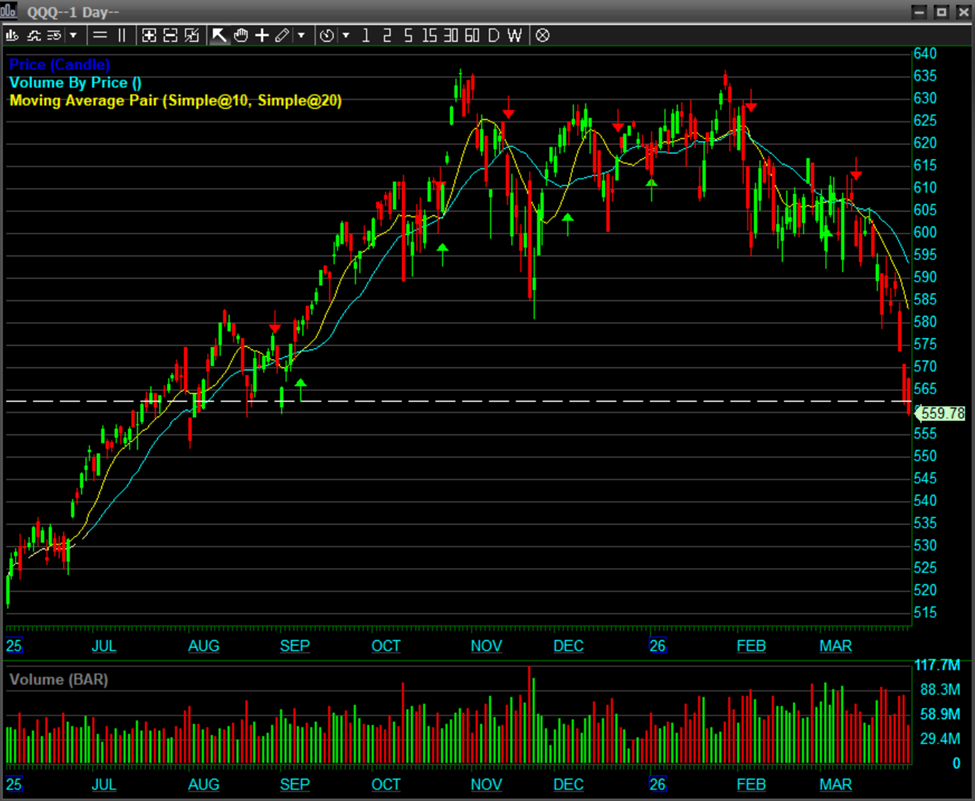 The $QQQ which represents the NASDAQ 100 is in correction territory.
You let reality be your guide. You go to the charts and perform a side-by-side comparison to see how price action is unfolding relative to prior events. To make a fair comparison, you need to examine the exact same time period—for example, looking at the first month after a war begins to evaluate how markets respond.
The Impact on Oil and the Markets
In this case, it does appear to be different. There has been a pattern in recent military conflicts where the onset of war negatively impacts markets. However, this latest conflict involving Iran has had an immediate and pronounced negative effect on equity markets, largely due to its direct impact on oil prices.
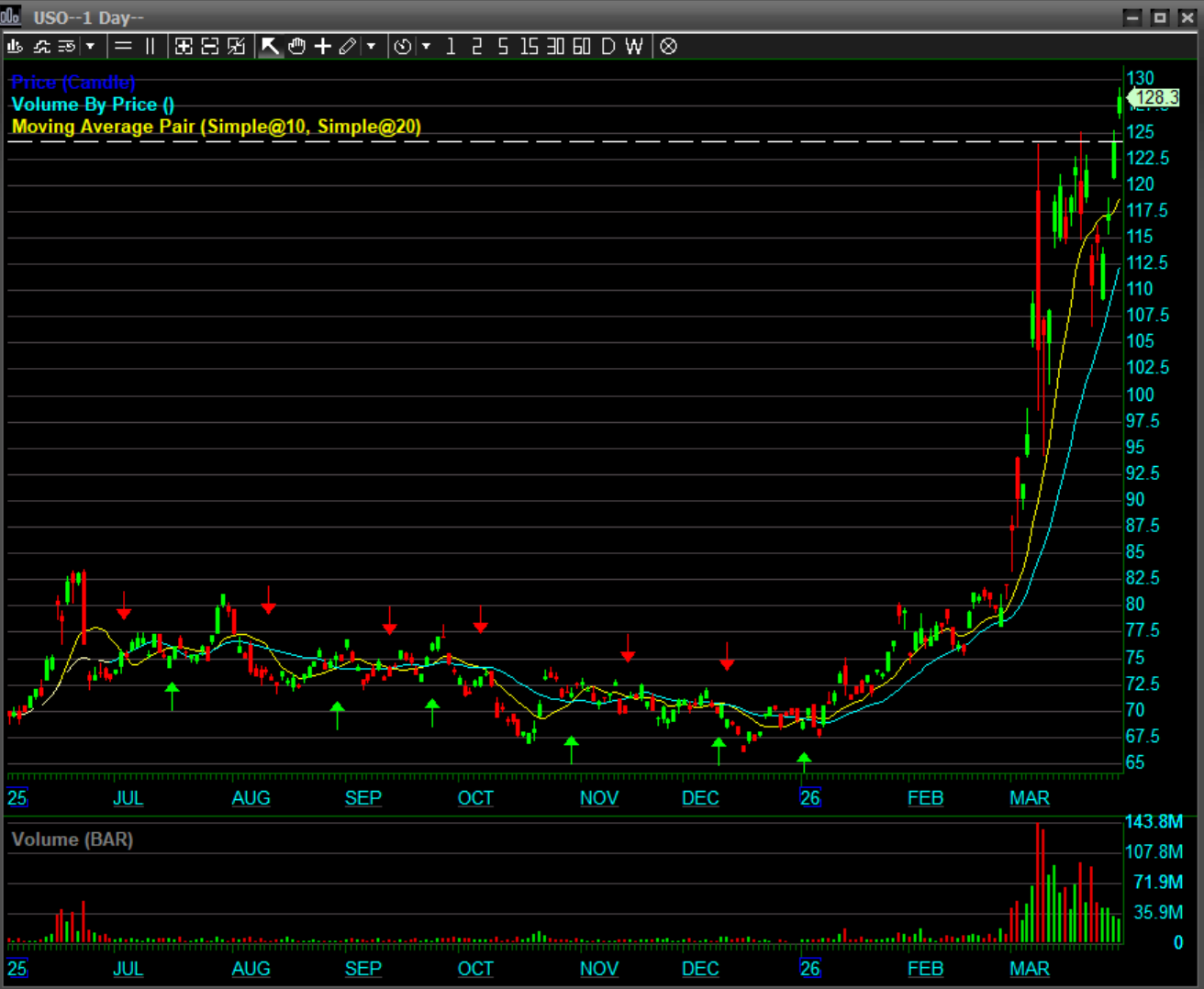 You can clearly see the explosive move in the price of oil in the $USO the Oil ETF.
This war is centered around the Strait of Hormuz, where roughly 25% of the world’s oil supply passes through. Even though much of this oil is not directly consumed in the United States, it still affects global crude prices, since oil is traded in a global market.
Since the start of this conflict, oil prices have surged approximately 45–50%. Prior to the war, oil was hovering around $65 per barrel—near multi-year lows. After the conflict began, prices initially spiked into the $85–$90 range and have since climbed as high as $115 per barrel.
Analyzing Oil’s Impact on Equities
The entire month of February was largely a downward slide for equities, punctuated by brief rallies triggered by announcements from Donald Trump suggesting that negotiations were underway or that the war might soon end. However, those rallies quickly faded as reports proved unsubstantiated or were denied by Iranian officials.
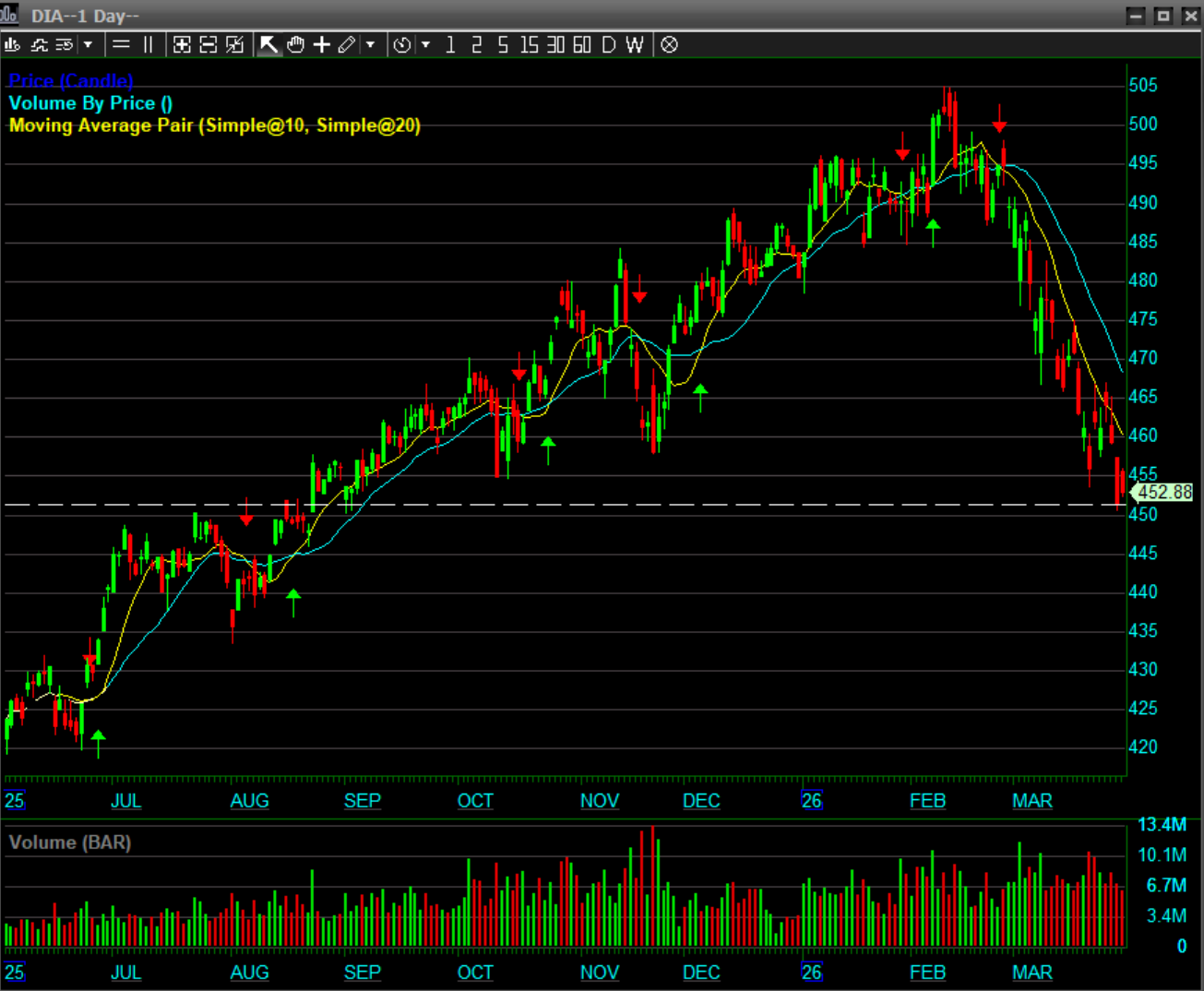
Every Index chart seems to conform that Oil is up and the Markets down and from the looks of it heading lower. The War in the Iran is having a direct Negative effect on all Equity markets. Here we see $DIA the Dow Jones Industrial Average ETF also heading into correction territory.
A good example of this dynamic occurred this morning (3/30/2026), when news broke that Iran had accepted most of a 15-point plan proposed by the United States. Markets initially reacted positively. However, that optimism was quickly tempered by conditions attached to the agreement—specifically, that Iran must comply within five days and reopen the Strait of Hormuz. This was coupled with a renewed warning that the United States could target Iran’s oil production capacity if terms are not met.
As a result, markets once again showed a familiar pattern: an initial positive reaction followed by a rapid fade. If Iran rejects the proposal and the United States follows through on its threats, oil prices could rise even further.
It does not require deep analysis to conclude that a cautious, wait-and-see approach is warranted in this environment. Traders and investors must base decisions on what is actually moving prices—not on what might happen next.
In times like these, discipline becomes more important than prediction. Markets driven by geopolitical uncertainty tend to react quickly and often reverse just as fast. Rather than trying to anticipate headlines, the more effective approach is to stay grounded in price action and confirmed trends. If this truly is “different,” the charts will continue to reflect it. Until then, patience and risk management remain the most valuable tools an investor can rely on.
Written by Michael DiGioia, Director of Education
Mike is available for One-on-One Coaching. Learn More