

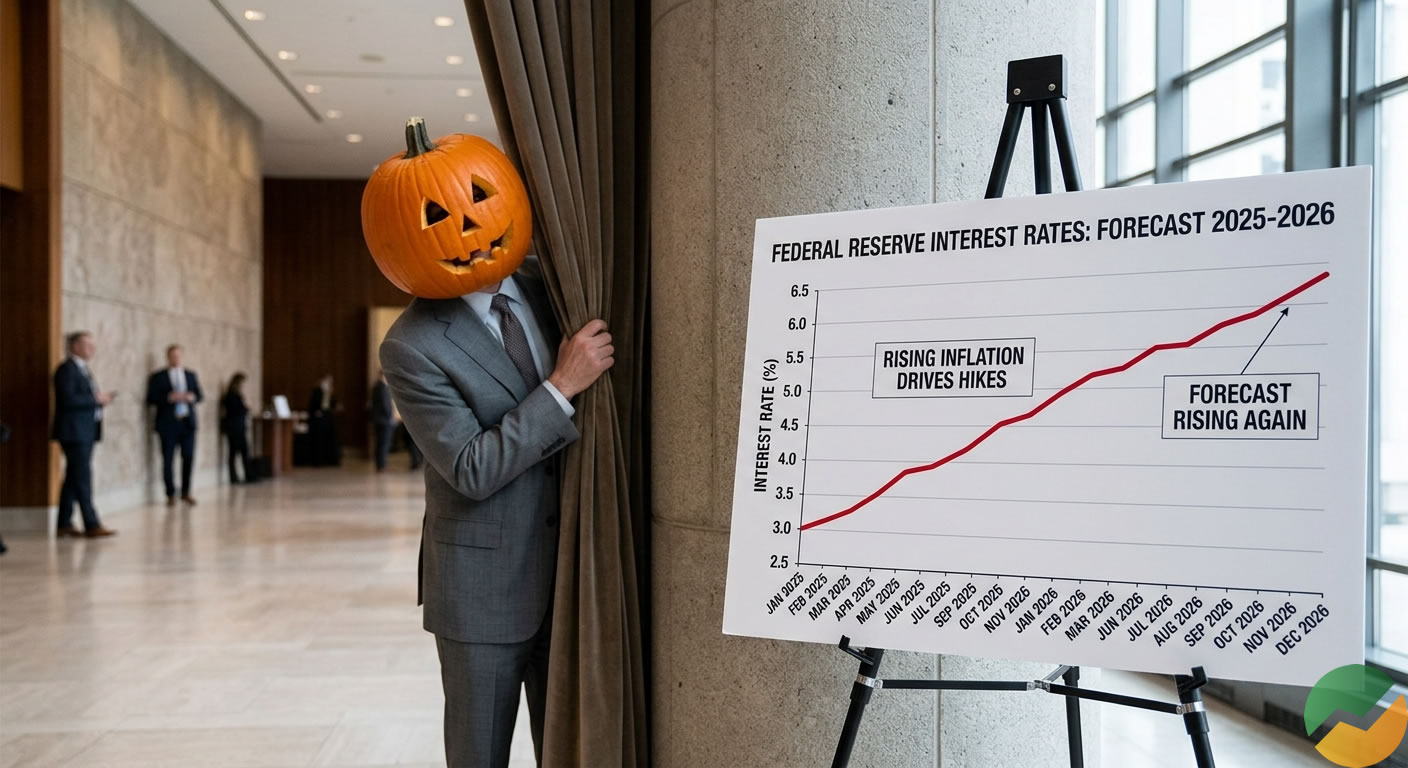
September reminded traders and investors that good economic news can sometimes be bad news for stocks. Sounds backward, right?
Normally, a strong economy should be good for markets. Strong growth means healthy companies, rising profits and, ideally, happy investors.
The problem is that the Federal Reserve has another concern: inflation.
This month’s economic data has generally been stronger than expected, creating a tricky situation for the Fed. If the economy keeps running hot, inflation could prove harder to bring down. That could force the Fed to keep interest rates higher for longer… or even consider raising them further to cool demand, and higher rates are generally not what traders and investors want to hear.
So, we have arrived at one of those counterintuitive moments in markets: the economy can be doing well, corporate earnings can be strong, and stocks can still feel nervous.
The Fed Is Caught Between a Rock and a Very Large Debt Mountain
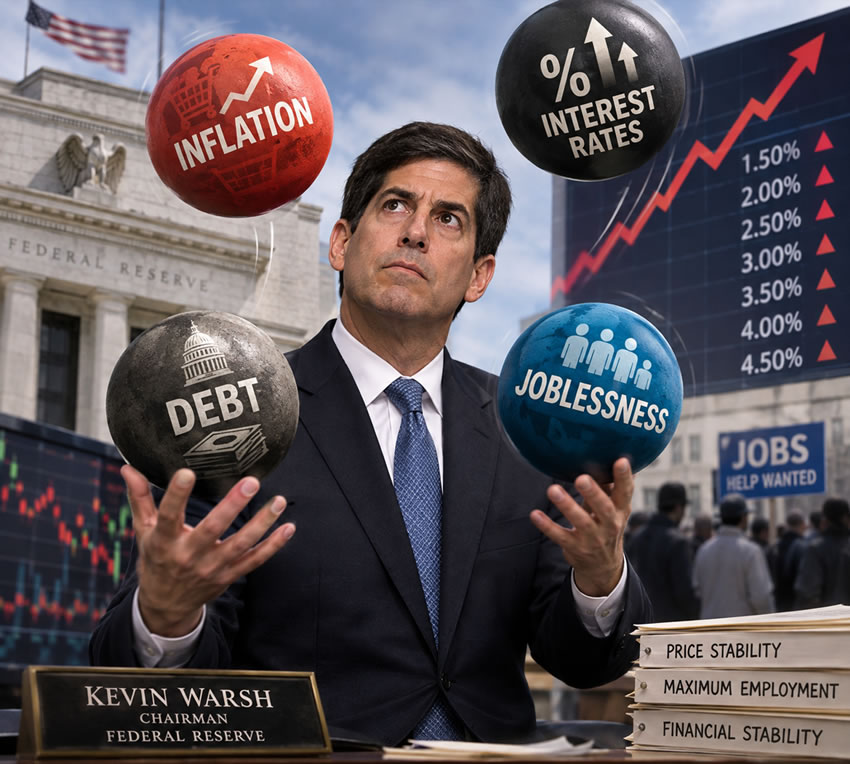
The Federal Reserve is facing a particularly awkward balancing act.
On one side is an economy that continues to show resilience. On the other is inflation, which the Fed needs to keep under control. And sitting rather conspicuously in the background is the enormous U.S. federal debt burden, which makes the cost of borrowing increasingly important.
When Treasury yields rise, the U.S. government must pay more to borrow money. Higher yields can also make government bonds more attractive than stocks, especially when investors can suddenly earn considerably more by simply lending money to Uncle Sam.
That creates a rather unusual tug-of-war.
The stronger the economy and the higher stock returns, the harder it is for the Fed to justify easing financial conditions if inflation remains a concern. At the same time, the government needs a functioning Treasury market to finance its borrowing.
In other words, the Fed is juggling a few balls in the air… and none of them are particularly small.
The Market’s Question Has Changed
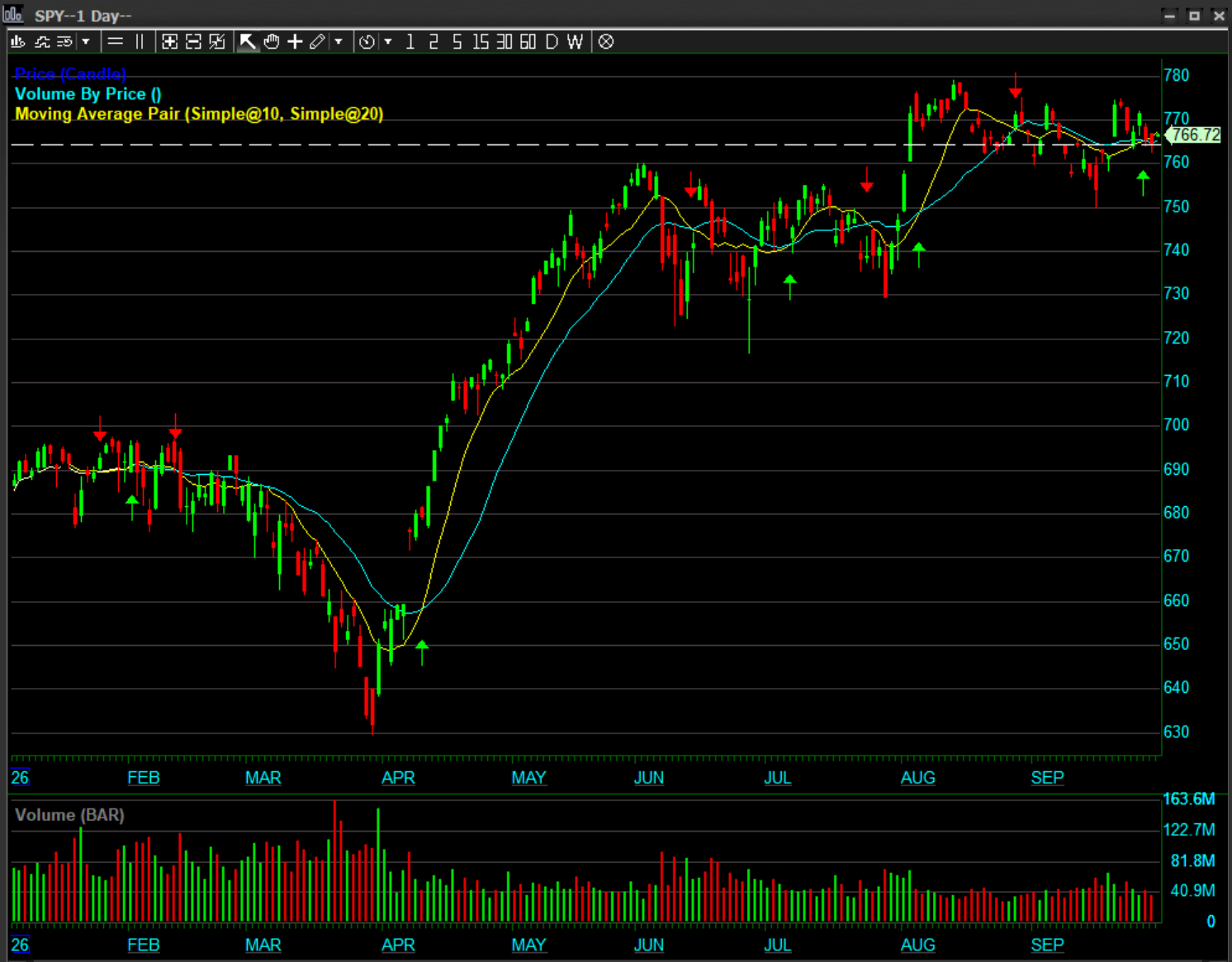
Underneath the headline economic strength, the market’s central debate has shifted. Traders and Investors are no longer asking simply whether the economy is growing. They are asking whether growth is strong enough to support corporate earnings without being so strong that it reignites inflation and forces the Fed to keep rates higher for longer.
That uncertainty is likely to stick around for the next few months, possibly even till the end of the year.
Corporate Earnings Continue to Outperform… But for How Long?
Corporate earnings remain one of the biggest reasons stocks have shrugged off higher Treasury yields.
Goldman Sachs estimates that S&P 500 earnings per share grew 51% year over year in the second quarter, with AI investment responsible for nearly half of this year’s EPS growth. The firm expects AI’s direct contribution to earnings growth to fade over time, making actual productivity gains increasingly important. (Goldman Sachs)
And that brings us to the next question: What Comes Next for AI?
The first phase of the AI investment story was relatively simple: Spend enormous amounts of money building the infrastructure.
The next phase is considerably more demanding: Show us the money.
Investors will increasingly want to see evidence that all those enormous AI investments are translating into:
- Higher revenue
- Better margins
- Increased productivity
- Recurring customer demand
- Sustainable free cash flow
In other words, the market is gradually moving from: “How much are companies spending on AI?” to: “What economic return are they actually getting from it?”
That may prove to be a much more interesting question.
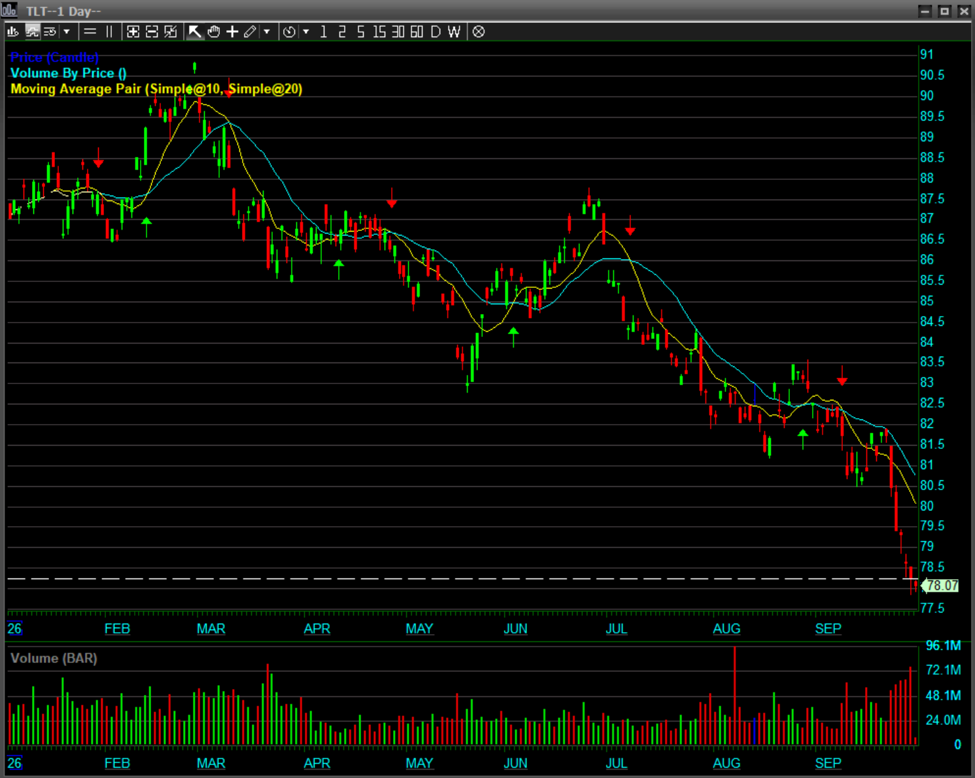 The TLT is the Price of the 20-Year Treasury Bond exchange-traded fund (ETF). As you can see, TLT’s price is extremely bearish.
The Bond Market Has Become the Biggest Risk Signal
As we mentioned earlier, the bond market is becoming increasingly important… and increasingly difficult to ignore.
Treasury yields have surged. (When yields surge, prices fall… like we see above on the chart of the TLT)
On September 29, the 30-year U.S. Treasury yield climbed to 5.612%, a new 24-year high and the highest level since June 2002, when it traded at 5.642%. The move extended a sharp rise in long-term borrowing costs, with the 30-year yield having already reached 5.48% on September 24, its highest level since 2004. (Reuters/Dow Jones)
This matters because Treasury yields help determine how much investors are willing to pay for stocks.
Higher yields can make bonds more attractive relative to equities and increase the discount rate applied to future corporate profits. Growth of stocks can be particularly sensitive because a larger portion of their valuation is based on profits investors expect to receive years into the future.
And yet, despite all of this, stocks have held up remarkably well.
Why?
Because the economy and corporate earnings have remained strong enough to offset much of the valuation pressure.
Which leaves us with a rather simple market equation: Stocks can tolerate higher interest rates if earnings grow quickly enough.
The question is how long that balancing act can continue.
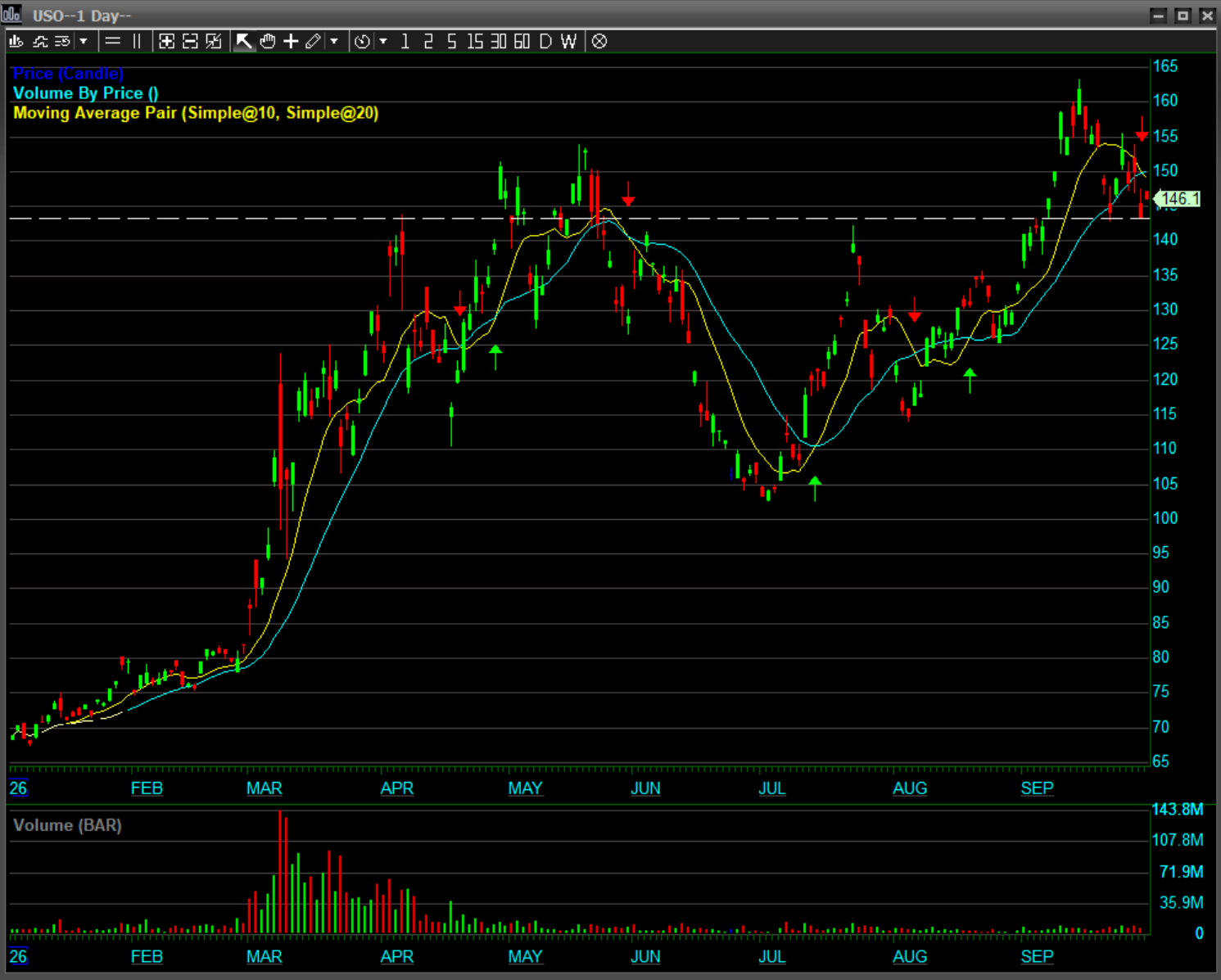 Oil prices are at record highs, as seen here in the USO, the Oil Exchange Traded Fund
Oil Has Become the Wild Card
The other major development is energy… and specifically the price of oil.
Brent crude approached $108 per barrel on September 28, with oil up roughly 20% during September. The move has been tied to continued disruption surrounding the Middle East and uncertainty surrounding the Strait of Hormuz.
Oil is the prime commodity; higher oil prices tend to show up everywhere. So it is a leading cause of inflation.
It affects transportation, manufacturing, food distribution, and the cost of producing just about everything. From the truck delivering your groceries to the milk sitting in the refrigerator… and yes, potentially even the price of that Milky Way bar at the corner store.
Higher energy prices can:
- Increase headline inflation.
- Reduce consumers’ disposable income.
- Increase transportation and production costs.
- Put pressure on corporate profit margins.
- Make it harder for the Federal Reserve to lower interest rates.
Once oil approaches $100 a barrel, investors tend to pay much closer attention. (currently at approx. $90 a Barrel)
Oil prices and Treasury yields matter because they can reinforce each other: higher energy costs can raise inflation expectations, while higher inflation expectations can put upward pressure on interest rates.
Hopefully, if geopolitical tensions ease and oil prices retreat, some of that pressure could reverse.
The Economy Is Still Providing Support
For now, the U.S. economy continues to provide an important cushion for investors.
Despite elevated energy prices and relatively high interest rates, economic activity has remained resilient. That resilience is one of the main reasons the stock market has stayed near record highs.
But resilience can be a double-edged sword.
A strong economy supports corporate earnings.
A very strong economy can also make the Federal Reserve nervous about inflation.
And that brings us to the big question heading into October: What Should Traders and Investors be Aware of for the coming months?
The economy is strong enough to support earnings… but perhaps strong enough to keep interest rates high.
That’s an unusual backdrop.
The S&P 500 remains near record territory, AI investment is supporting earnings growth, and economic activity remains firm. At the same time, Treasury yields have climbed dramatically, oil has surged, inflation remains above the Fed’s target, and the central bank has resumed tightening. (Federal Reserve)
So, as we head into October, investors have a slightly strange Halloween problem:
The economy isn’t scaring anyone. Yet!
Inflation might be scaring the Fed a little.
Treasury yields deserve a closer look and are getting a little scary.
And somewhere in the background, the new Fed Chairman is trying to cool the economy without accidentally cooling it into a recession or upsetting the President too much. That’s a lot to juggle.
Written by Michael DiGioia, Director of Education
Mike is available for One-on-One Coaching. Learn More