


The summer of 2026 has been full of ups and downs (literally) in the U.S. stock markets. Traders and investors have had to balance strong corporate earnings and enthusiasm surrounding artificial intelligence with persistent inflation, higher interest rates, geopolitical risks, and concerns about expensive stock valuations.
Despite those challenges, the U.S. stock market has remained remarkably resilient. But notice the word resilient… not bullish. Markets have, for the most part, held their recent gains and, even despite some disappointments, have battled back.
To put it simply, the summer of 2026 in the stock markets has been less about simple bullish or bearish momentum and more about investors constantly reassessing what comes next.
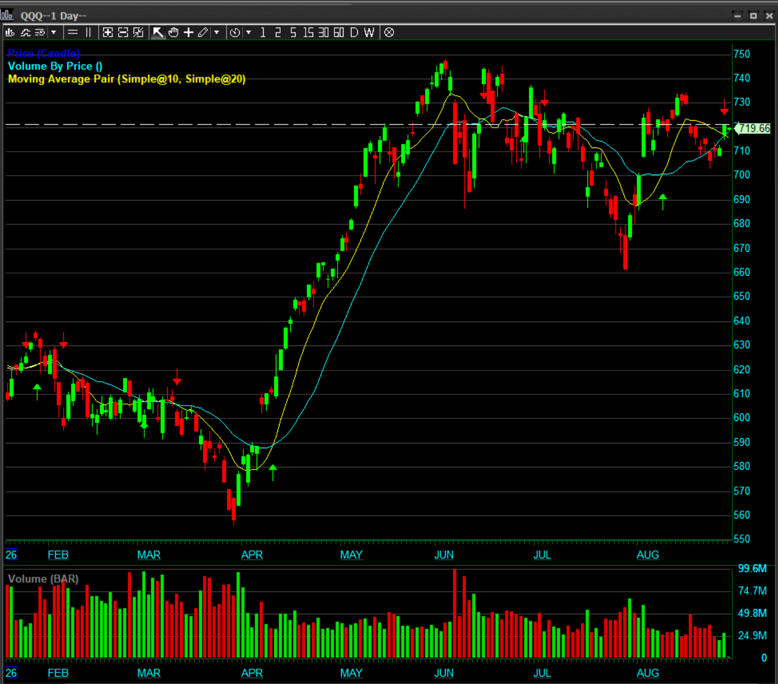 Stock Market Summer Chop Suey
AI Continues to Drive the Market
The biggest story of the summer has been artificial intelligence. Investors continue to pour money into companies involved in AI chips, data centers, software, and cloud computing.
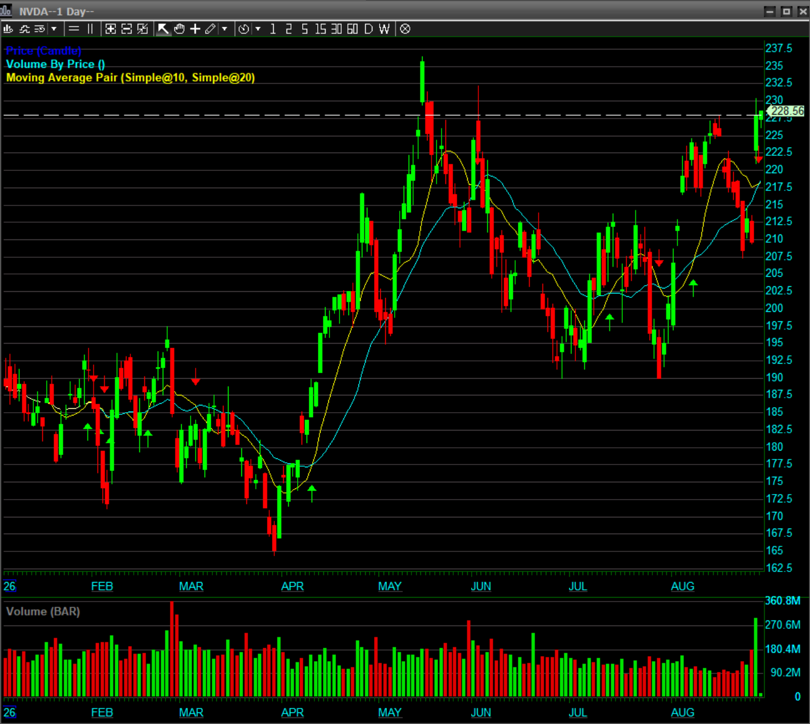 NVDA is holding up the Markets once again; the question is what happens if NVDA falls?
One of the clearest examples is Nvidia ($NVDA). The company reported second-quarter revenue substantially above Wall Street expectations. Nvidia also forecast higher-than-expected revenue for its next quarter, demonstrating that demand for AI infrastructure remains extremely strong.
The AI boom is important because it is no longer limited to a handful of technology companies. Businesses across many industries are investing in AI to improve productivity, automate work, analyze information, and develop new products.
However, traders and investors should remember that strong growth can create high expectations. When a company’s stock price already assumes years of rapid growth, even a good earnings report may not be enough. That is one reason AI stocks have experienced periods of sharp volatility this summer.
Inflation Remains a Major Concern
While corporate earnings have been generally good, inflation remains one of the biggest risks facing investors.
The latest July Personal Consumption Expenditures inflation data showed prices rising 3.7% from a year earlier. That is well above the Federal Reserve’s 2% inflation target. Consumer spending also showed signs of slowing, creating a complicated picture for the economy.
High inflation effectively ties the hands of the new Federal Reserve Chairman, Kevin Warsh, who took office back in May. His upcoming speech at Jackson Hole will be especially important this year, as traders and investors look for clues about how the Federal Reserve views inflation, economic growth, and future interest-rate policy.

The Bond Market and Interest Rates Really Matter
The stock market does not operate in isolation. One of the most important developments this summer has been movement in the bond market.
Long-term Treasury yields have remained elevated, with the 10-year Treasury yield recently around 4.65%. Higher yields can put pressure on stocks because investors can earn more from relatively lower-risk government bonds. Higher borrowing costs can also affect companies that depend heavily on debt financing.
Technology and growth companies can be particularly sensitive to interest rates because much of their valuation is based on expectations of profits far into the future. When interest rates rise, those future profits become less valuable in today’s dollars.
This creates an interesting battle for traders and investors to gauge: strong earnings and AI growth are pushing stocks higher, while inflation and interest rates are creating pressure in the opposite direction.
This is what has created this summer’s volatility and lack of substantial new highs.
The Wall of Worry Update
Although the summer rally has held its recent gains, investors should remain cautious for several reasons.
First, valuations are elevated in parts of the market. When stocks rise quickly, expectations can become difficult to meet. A company can report excellent results and still see its stock fall if investors expected even more.
Second, inflation remains above the Federal Reserve’s target. A renewed increase in inflation could push interest rates higher and pressure stock valuations.
Third, geopolitical tensions continue to create uncertainty. Oil prices have moved significantly this year, partly because of tensions involving Iran and the Middle East. Higher energy prices could make inflation more difficult to control.
Finally, the market may simply need a pause. Historical seasonal patterns suggest that late summer and early autumn can be a challenging period for stocks. That does not guarantee a decline, but it is a reminder that markets rarely move upward in a straight line.
So, caution is always advised in a market that is already elevated. This is a great trader’s market, but all we need at these levels is one news catalyst, and these resilient markets can turn decidedly bearish.
We must not forget that September and October have historically been challenging months for the stock market.
Trade Wisely.
Written by Michael DiGioia, Director of Education
Mike is available for One-on-One Coaching. Learn More